Supreme Court Yamuna Pollution Case: Delhi Jal Board vs Abhisht Kusum Gupta – Key Updates (2026)
Introduction
The issue of Yamuna river pollution has once again come under scrutiny in the Supreme Court of India. In the ongoing case involving the Delhi Jal Board, the Court is actively examining steps to prevent the discharge of untreated effluents into the river.
This blog breaks down the latest developments, legal directions, and what it means for environmental governance in India.
## Background of the Case
The matter titled Delhi Jal Board vs Abhisht Kusum Gupta & Others is part of a broader legal battle addressing water pollution in the Yamuna River, one of India’s most polluted rivers.
The case falls under the Court’s civil appellate jurisdiction, highlighting ongoing concerns about:
* Industrial discharge into rivers
* Sewage management failures
* Inter-state accountability
## Key Supreme Court Directions
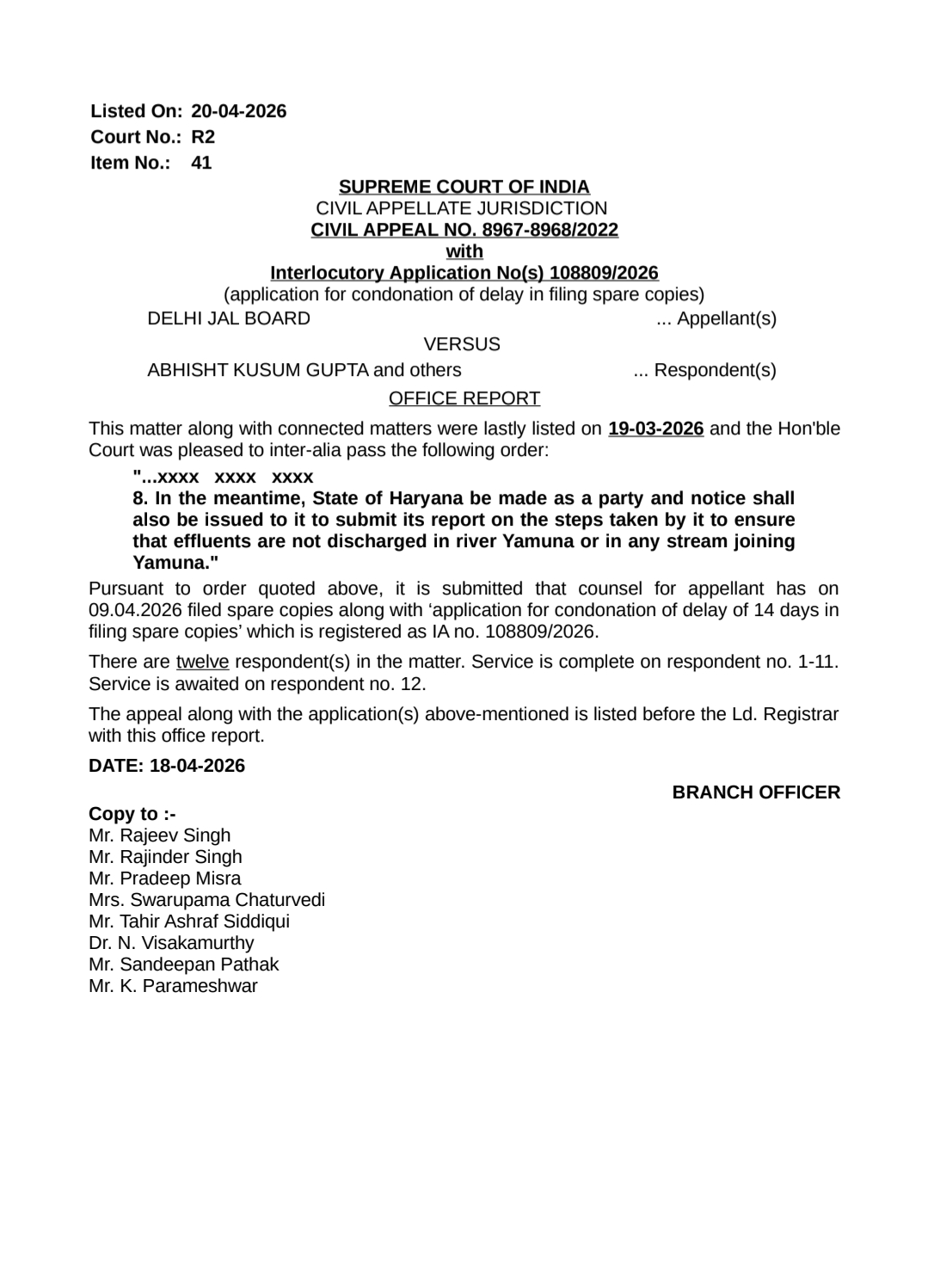
During the hearing on March 19, 2026, the Supreme Court of India issued an important directive:
* The State of Haryana was ordered to be added as a party to the case
* Haryana must submit a detailed report on:
* Measures taken to stop effluents entering the Yamuna
* Monitoring of industrial and sewage discharge
This step underscores the interstate nature of river pollution, where upstream actions impact downstream water quality.
## Latest Case Updates (April 2026)
### 1. Filing Delay Condonation
The Delhi Jal Board filed required documents with a 14-day delay, along with a formal request for condonation. This is a procedural step, and courts typically decide whether the delay is justified.
### 2. Respondent Status
* Total respondents: 12
* Notices served: Respondents 1–11
* Pending: Respondent 12
This indicates the case is still in a procedural stage before substantive arguments resume.
### 3. Listing Before Registrar
The matter is currently listed before the *Registrar*, meaning:
* Administrative and procedural compliance is being reviewed
* The case is not yet at the final hearing stage
## Why This Case Matters
### 🌊 Environmental Impact
The Yamuna River is a lifeline for millions, yet suffers from:
* Untreated sewage discharge
* Industrial pollution
* Poor waste management
This case could push for stricter enforcement of environmental laws.
### 🏛️ Legal Significance
The involvement of multiple states highlights:
* The complexity of interstate environmental disputes
* The Court’s role in ensuring cooperative federalism
### 🔍 Governance & Accountability
By demanding reports from states like Haryana, the Court is:
* Increasing transparency
* Holding authorities accountable for pollution control
## What Happens Next?
The next steps in the case may include:
* Decision on delay condonation
* Completion of notice service to all respondents
* Submission of Haryana’s compliance report
* Scheduling of substantive hearings
## Conclusion
The Supreme Court Yamuna pollution case 2026 is a crucial development in India’s environmental jurisprudence. With the Delhi Jal Board and multiple stakeholders involved, the outcome could significantly impact river conservation policies and pollution control mechanisms.
#Yamuna river pollution case #Supreme Court Yamuna case 2026 #Delhi Jal Board Supreme Court case #Yamuna pollution legal updates #India river pollution laws #Haryana Yamuna pollution report #Supreme Court environmental cases India #Yamuna cleaning case India #Water pollution Supreme Court India #Environmental litigation India
https://api.sci.gov.in/officereport/2022/36763/36763_2022_2026-04-20.pdf
{{item.comment}}
{{item.name}}
{{item.postDate}}