Citizen Action for a Plastic-Free Future: Strengthening Environmental Governance
Environmental sustainability requires more than policies—it requires active participation from citizens, communities, institutions, and government agencies. Across India, plastic pollution continues to threaten public health, biodiversity, and urban ecosystems, making collaborative action essential.
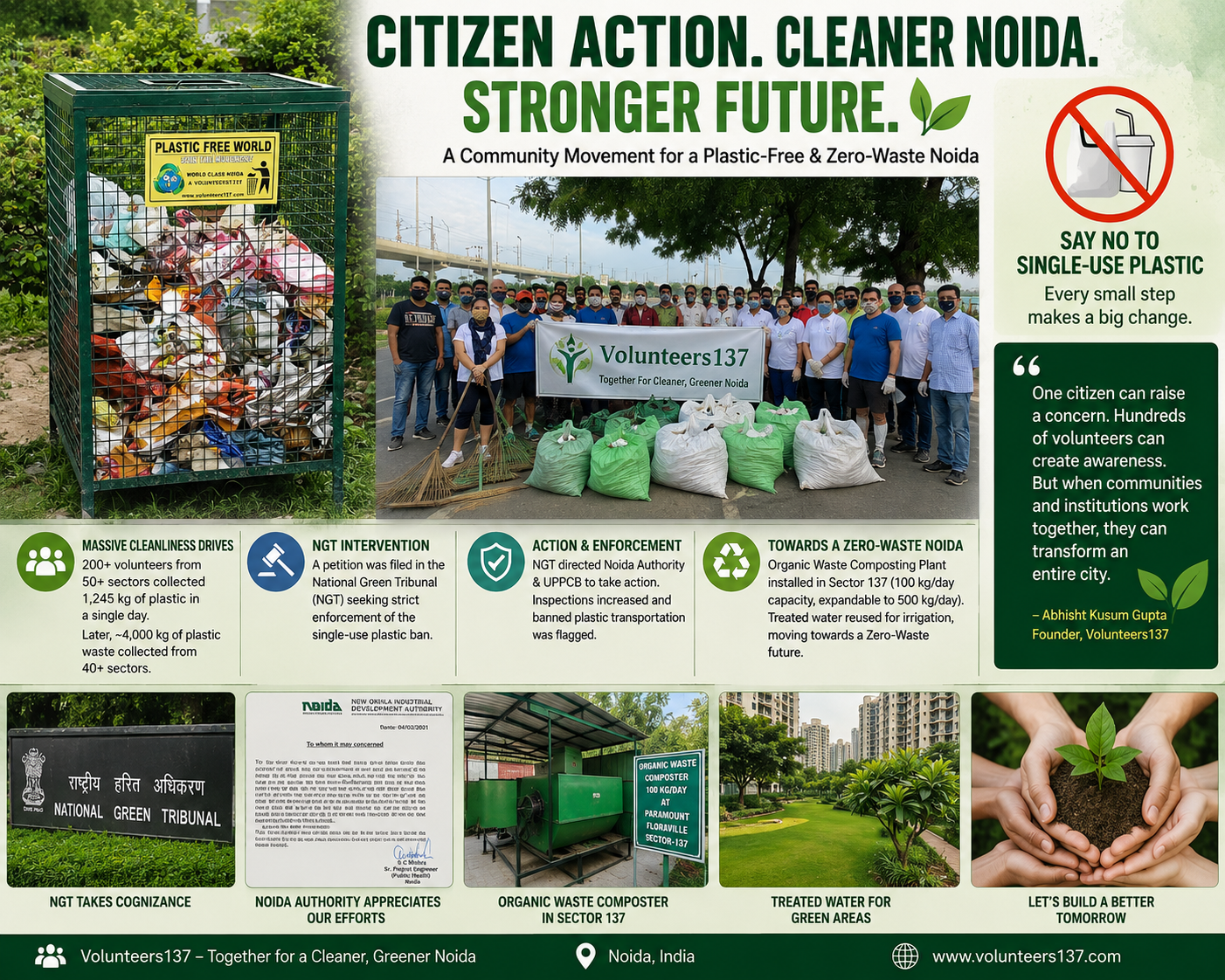
One significant milestone in strengthening environmental governance was the proceedings before the National Green Tribunal (NGT) in Original Application (OA) No. 80/2021, which highlighted concerns regarding the implementation of the ban on single-use plastics in Noida. The application sought effective enforcement of the Plastic Waste Management Rules, 2018 and the Uttar Pradesh Plastic and Other Non-Biodegradable Garbage (Regulation of Use and Disposal) (Amendment) Ordinance, 2018. (CaseMine)
In its order dated 25 March 2021, the NGT observed that while the adverse effects of single-use plastic are well recognized and laws already exist, effective implementation is primarily a matter of governance. The Tribunal directed the Noida Authority and the Uttar Pradesh Pollution Control Board (UPPCB) to examine the grievance and take action in accordance with the law. (CaseMine)
The case reinforced an important principle: environmental legislation alone is insufficient unless it is supported by effective enforcement, institutional accountability, and public participation.
Citizen-led cleanliness drives, waste segregation campaigns, plastic collection initiatives, and awareness programmes have demonstrated how communities can complement government efforts. Such initiatives encourage responsible waste disposal, reduce plastic leakage into drains and water bodies, and promote sustainable alternatives.
Building sustainable cities requires:
-
Strict enforcement of environmental laws.
-
Reduction in the use of single-use plastics.
-
Segregation of waste at source.
-
Recycling and composting of waste.
-
Active participation by residents, schools, RWAs, industries, and local authorities.
-
Continuous environmental awareness and community engagement.
The experience surrounding OA No. 80/2021 illustrates that environmental protection is a shared responsibility. When citizens raise legitimate environmental concerns through lawful means and institutions respond effectively, it strengthens governance and accelerates progress toward cleaner, healthier, and more sustainable cities. (CaseMine)
Together, collective action, responsible governance, and community participation can transform environmental challenges into opportunities for building a cleaner and greener future.
#PlasticFreeIndia #CitizenAction #NGT #OANo80of2021 #PlasticWasteManagement #EnvironmentalGovernance #WasteManagement #Sustainability #ZeroWaste #CleanCities #CommunityParticipation #ClimateAction

{{item.comment}}
{{item.name}}
{{item.postDate}}