
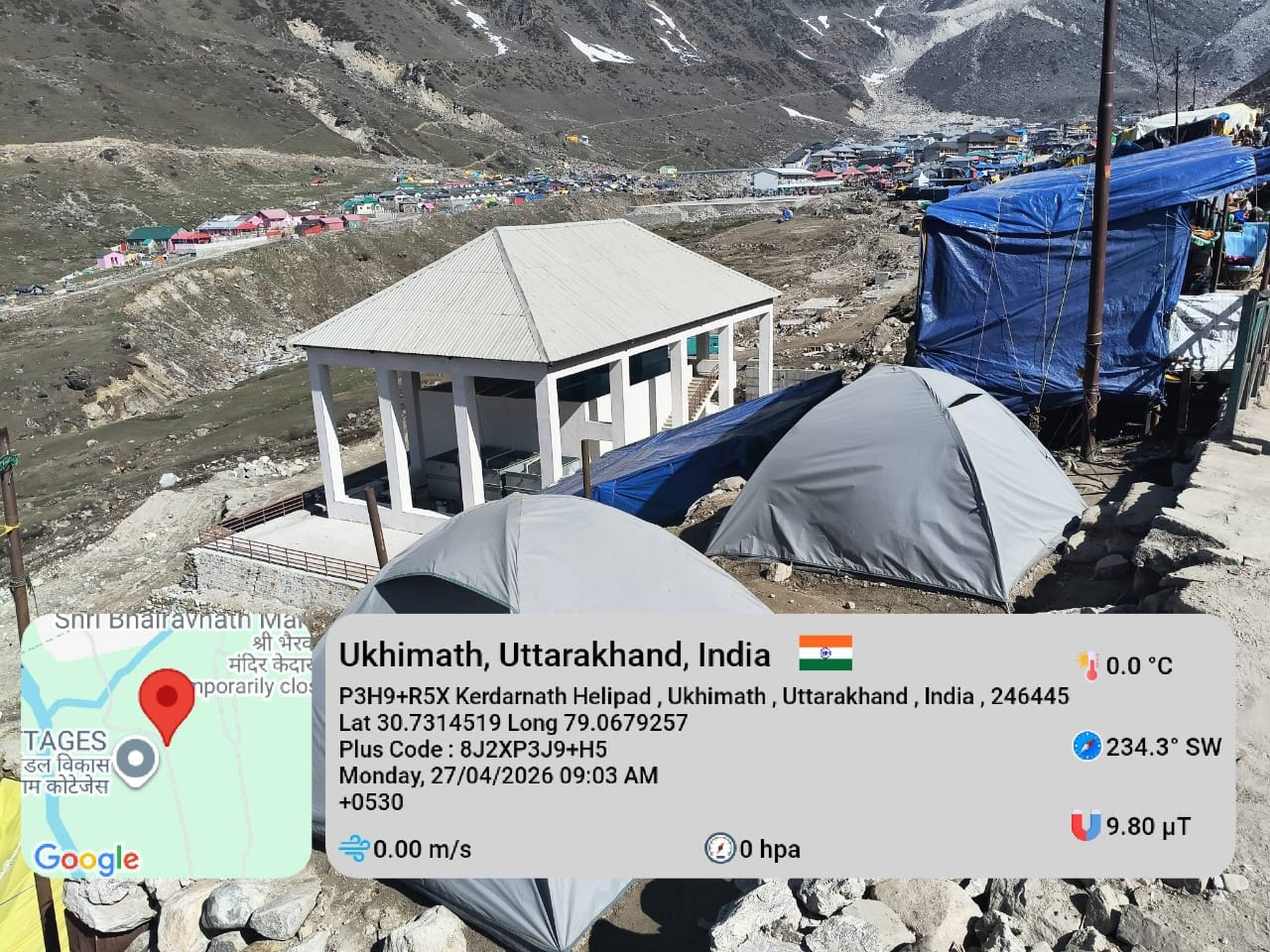
Kedarnath Yatra 2026: A Sacred Journey Under Environmental Stress
During my recent visit to Kedarnath (Shri Kedarnath Dham) on 27 April 2026, I expected spiritual peace and natural purity. Instead, I encountered a disturbing reality—one that raises serious questions about environmental governance in one of India’s most sacred and ecologically sensitive regions.
A Fragile Ecosystem Under Pressure
The Kedarnath trekking route passes through the pristine Himalayan landscape, alongside the sacred Mandakini River. This ecosystem is not just spiritually important—it is environmentally fragile. Yet, what I observed suggests increasing stress due to unmanaged human activity.
Ground Reality: What I Saw
1. Non-Functional Sewage Treatment Plant (STP)
A key concern was a non-functional STP, raising the risk of untreated sewage entering the Mandakini River. This is not just a regulatory lapse—it directly threatens water quality and downstream communities.
2. Plastic Waste Everywhere
From the base to the upper stretches of the trek, plastic bottles and waste were scattered across the route. Despite awareness campaigns, the lack of enforcement is evident.
3. Inefficient Waste Management System
The Material Recovery Facility (MRF)—critical for handling waste—appears inadequate. In particular, the baling capacity within the MRF is insufficient for the volume of plastic generated during peak pilgrimage.
4. Unauthorized Camps and Shops
Large numbers of unregulated tents and makeshift shops were visible. These not only encroach on fragile land but also contribute to:
-
Poor waste disposal
-
Sewage leakage
-
Visual and ecological degradation
What the Law Requires
Under the Solid Waste Management Rules 2016, authorities are required to:
-
Ensure proper waste collection and processing
-
Prevent littering and open dumping
-
Maintain functional waste management systems
Additionally, the National Green Tribunal, in Original Application No. 751 of 2024 (Abhisht Kusum Gupta vs State of Uttarakhand & Ors.), has emphasized:
-
Scientific waste management in ecologically sensitive zones
-
Prevention of untreated sewage discharge
-
Accountability of local administration
The current situation suggests a gap between policy and implementation.
A Practical Way Forward: Geo-Tagging for Accountability
One of the most effective solutions is geo-tagging combined with real-time monitoring:
1. Geo-Tag All Shops and Camps
-
Register every establishment
-
Identify unauthorized encroachments instantly
2. Monitor Critical Infrastructure
-
STPs (functional status)
-
MRFs (including baling performance)
-
Waste collection points
3. Real-Time Field Monitoring
-
GPS-enabled inspections
-
Photo-based evidence with timestamps
4. Centralized Dashboard
-
Accessible to authorities for tracking compliance and enforcement
Why This Matters
Kedarnath is not just a destination—it is a symbol of faith. But faith cannot come at the cost of environmental degradation. If left unchecked:
-
River pollution will worsen
-
Waste accumulation will increase
-
The Himalayan ecosystem will face irreversible damage
Final Thought
The Kedarnath Yatra should be a journey of devotion—not a witness to environmental neglect. With proper governance, technology, and accountability, it is entirely possible to preserve both spirituality and sustainability.
#Kedarnath #MandakiniRiver #Uttarakhand #WasteManagement #SaveHimalayas #RiverConservation #SustainableTourism #SwachhBharat #PublicAccountability #GeoTagging

{{item.comment}}
{{item.name}}
{{item.postDate}}